
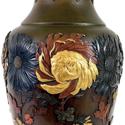
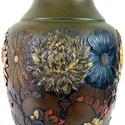
The firm, producing made-to-order pieces in a range of mediums from 1873-91, opened its New York branch as early as 1877.
In particular, Kiryu Kosho Kaisha was known for its range of decorative vases that combined the two principal metalworking traditions of pre-modern Japan: bronze casting and onlaying in gold, silver and copper alloys.
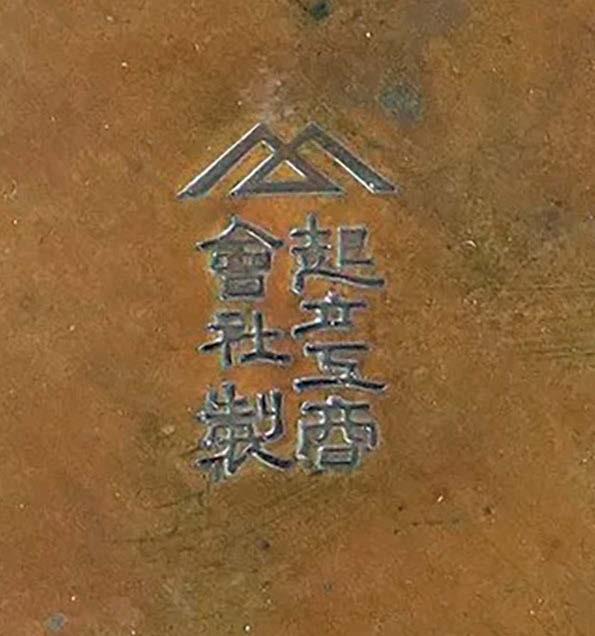
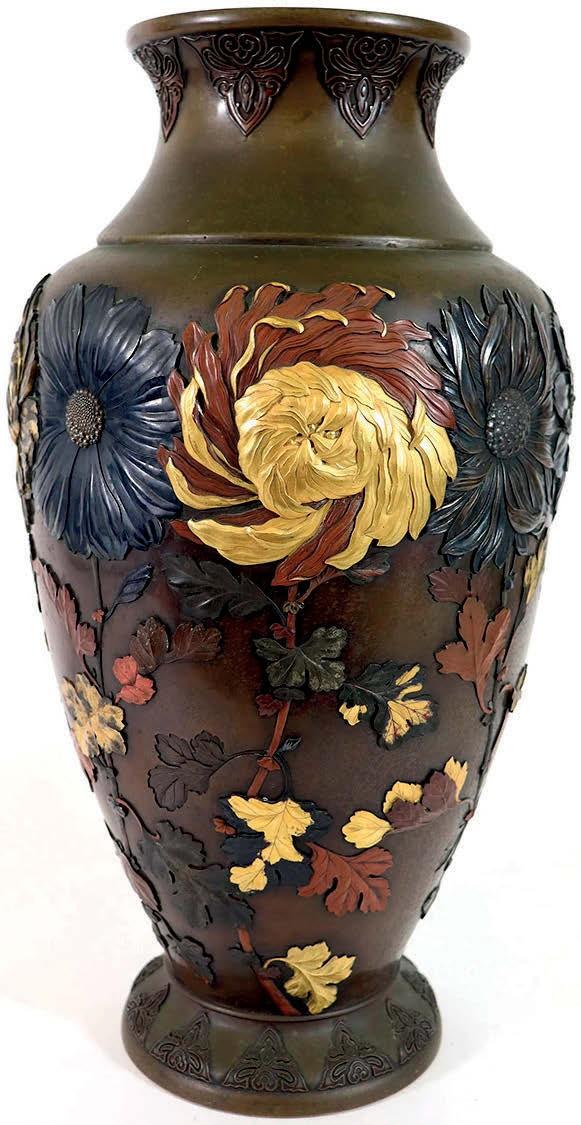
Detail of Kiryu Kosho Kaisya mixed-metal vase, $17,000 (£12,770) at Vero Beach Auction.
Many were produced under the supervision of director, designer and lead artist Suzuki Chokichi (1848-1919). Close to 2000 of the original designs are now preserved in Tokyo University of Arts.
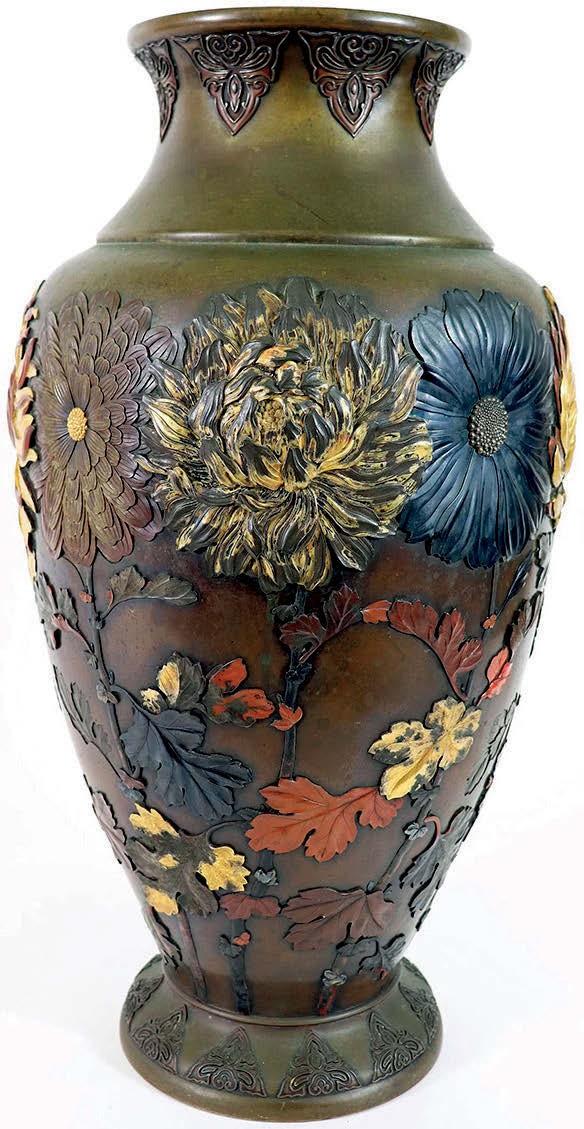
Chokichi (who took the art name Kako) was probably responsible for the large mixed-metal vase that sold to an international specialist dealer for $17,000 (£12,770) at Vero Beach Auction (20% buyer’s premium) in Florida on September 27.
It came for sale with a guide of $10,000-15,000 from a family whose ancestors had worked overseas in the early 20th century.
The design across the 18in (45cm) high baluster form featured large chrysanthemum blooms. It was signed to the base Kiryu Kosho Kaisha sei with the double-mountain trademark.
Super snake
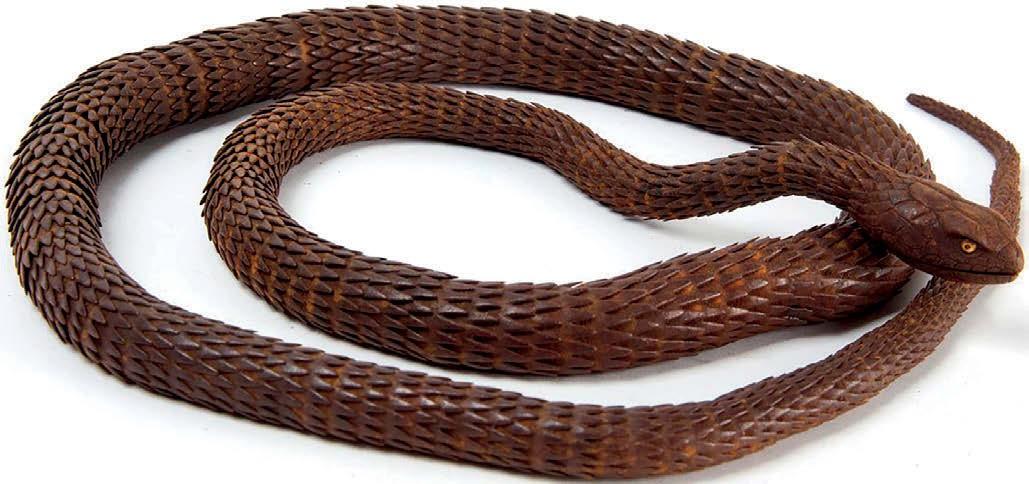
Meiji period jizai okimono of a snake, $34,000 (£25,550) at New England Auctions.
More top-drawer Meiji metalwork emerged at New England Auctions (30/29/25% buyer’s premium) in Branford, Connecticut, on September 25. Estimated at $10,000-20,000, an iron jizai okimono (articulated) model of a snake sold for $34,000 (£25,550).

Meiji period jizai okimono of a snake, $34,000 (£25,550) at New England Auctions.
Originally made by armourers as a sideline during the Edo period, these models were first appreciated by senior samurai but after the ‘opening up’ of Japan from the 1850s became popular with foreign buyers. The 4ft 3in (1.27m) long model, with fully articulated body was signed to the underside of the hinged jaw.