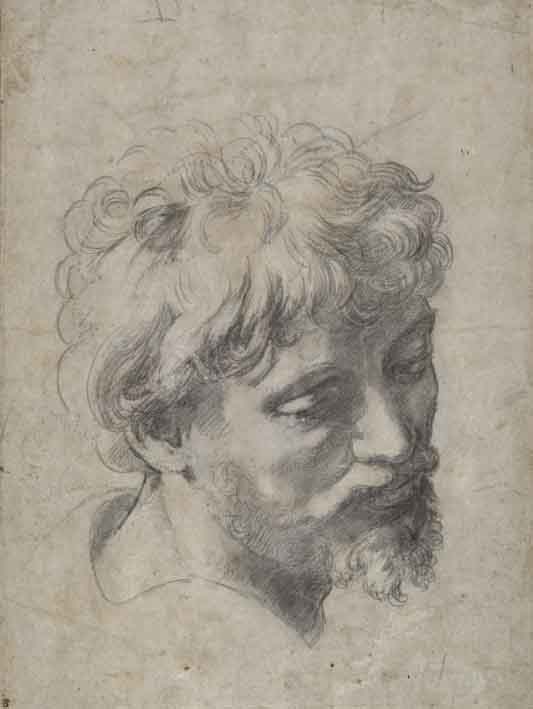

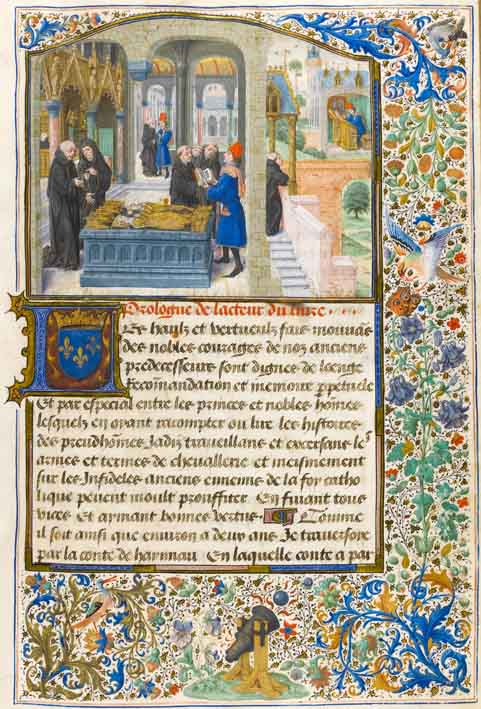
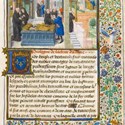
Estimated at £10m-15m, it will feature at the Old Master evening sale in London on December 5 alongside two 15th century illuminated manuscripts also from Chatsworth which rank among the finest examples of their kind ever to come to auction.
The current Duke of Devonshire is the company's deputy chairman, having joined the Sotheby's board in November 1994, and these consignments follow the £5.26m dispersal of items from the Chatsworth attics in October 2010, as well as the start of Sotheby's seventh Beyond Limits selling exhibition of sculpture, an event held annually on the grounds of the Derbyshire estate.
In a press release received by ATG, the Duke said the funds raised from these sales will be used "to benefit the long-term future of Chatsworth and its collections".
The Raphael drawing itself is a black chalk sketch executed c.1519-20 and was a study for one of the figures in The Transfiguration, one his greatest paintings, now in the Vatican.
Entitled Head of an Apostle, the 14¾ x 11in (38 x 28cm) picture is one of 17 auxiliary cartoons for The Transfiguration that are known, nine of which currently feature in an exhibition on the late works of Raphael in the Prado Museum in Madrid.
Sensational Collection
As with many of the 2000 or so drawings at Chatsworth, Head of an Apostle was bought by William Cavendish, the 2nd Duke of Devonshire (1672-1729), an avid collector who managed to regularly beat all the other leading European collectors of the time to own the greatest prizes that became available.
Despite the sale of this undoubtedly important work, the Chatsworth estate will still retain 14 Raphael drawings - more than any British collection apart from the British Museum and the Ashmolean. Two that will remain are also studies for The Transfiguration painting.
The last major auction of drawings from Chatsworth was back in July 1984 when Christie's sold a sensational group of 71 sketches which totalled £19.6m. As well as a page from Vasari's Libro de' disegni which took £3m and a portrait by Hans Holbein the Younger that made £1.45m, there were also two Raphaels - one drawing of St Paul that made £1.4m and the red chalk Head and Hand of an Apostle that sold for £3.3m, then a record for an Old Master drawing at auction.
Indeed, the latter work reappeared at Christie's in December 1996 when it was knocked down at £4.8m to an anonymous collector.
However, since then the bar has seriously risen for Raphael drawings.
The auction record now stands at £26m following the sale of the black chalk Head of a Muse at Christie's in December 2009. It was reportedly bought by the American collector Leon Black who more recently was also the rumoured buyer of Edvard Munch's The Scream when it sold for $107m (£69m) at Sotheby's in May.
Whether he will emerge as a contender for Head of an Apostle remains to be seen but, either way, the drawing will likely provide some significant funds for the upkeep of Chatsworth.
Illuminated Manuscripts
Meanwhile, the illuminated manuscripts from the Devonshire collection being sold by Sotheby's were both made for two of the finest libraries of the 15th century. Mystere de la Vengeance, which has been estimated at £4-6m, was commissioned by the Duke of Burgundy, Philip the Good (1396-1467), one of the great royal art patrons and book collectors of the late Middle Ages. It features 20 large illuminated miniatures and the text of a play in French which was performed for the Philip himself.
It was acquired by the 6th Duke of Devonshire at the celebrated Roxburghe sale of 1812, when it sold for £493.10s. - then the highest price ever paid for any illuminated manuscript.
The second illuminated manuscript, estimated at £3-5m, is an account of the fictional and swashbuckling Deeds of Sir Gillion de Trazegnies in the Holy Land. It was produced in 1464 for Louis de Gruuthuse (1422-92), courtier to Philip the Good, and was later among the treasured works in the library of François I, King of France (1515-47).